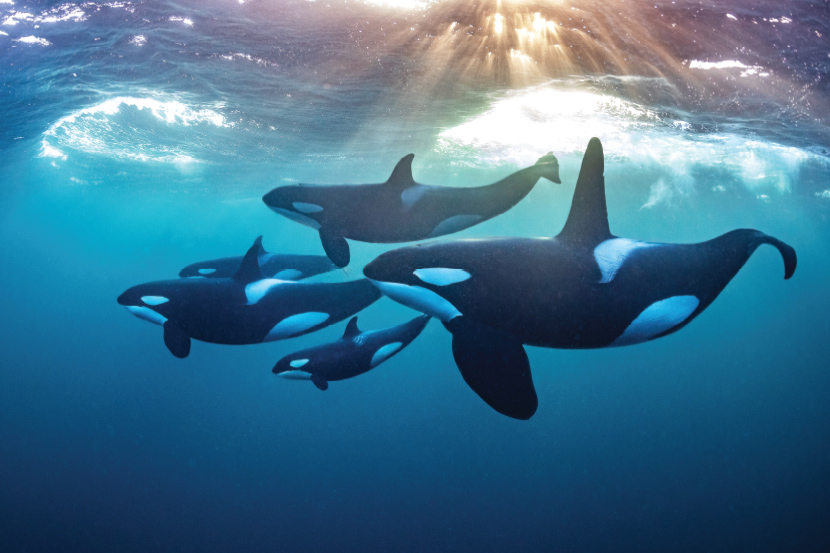
From orca encounters in the Arctic to garibaldi fish in California’s forests, dive instructor Todd Thimios explores the planet’s most awe-inspiring underwater realm.
NORTHERN NORWARD
(Arctic Circle)
Why it’s special
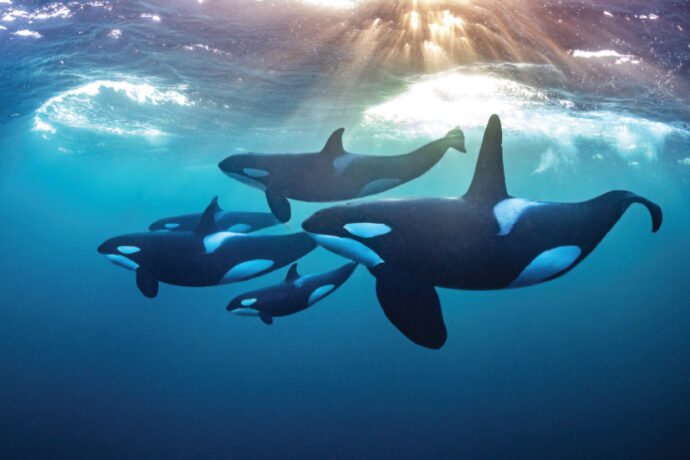
A close encounter with a pod of wild orcas is a dream for many divers. As the ocean’s apex predator, orcas are equally as graceful as they are powerful.
While efficient at hunting prey, their “killer whale” misnomer has made them widely feared, yet there’s never been a recorded attack on a human in the wild.
Like their dolphin cousins, orcas travel in pods.
Although globally distributed, orcas are rarely encountered; you could spend a lifetime underwater and never see one. One of the most reliable places for an encounter is the Arctic Circle, in northern Norway, during the herring run. If you can handle sub-zero temperatures and lots of breath holding to share a few fleeting moments with an orca, then you’ll be rewarded with one of the greatest experiences of your life.
Best time to dive
From November to January, orcas can be found hunting the frigid waters of Tromsø, in northern Norway, for spring-spawning herring. Orcas follow the migrating herring into the fjords and, in a perfect scenario, they separate smaller patches of herring from the larger shoals and force them to the surface. November and mid-January are best, as there’s still sunlight in northern Norway. In the last week of November, the Polar Night Season sets in until mid-January, and the days turn to 24 hours of darkness.
Dive in
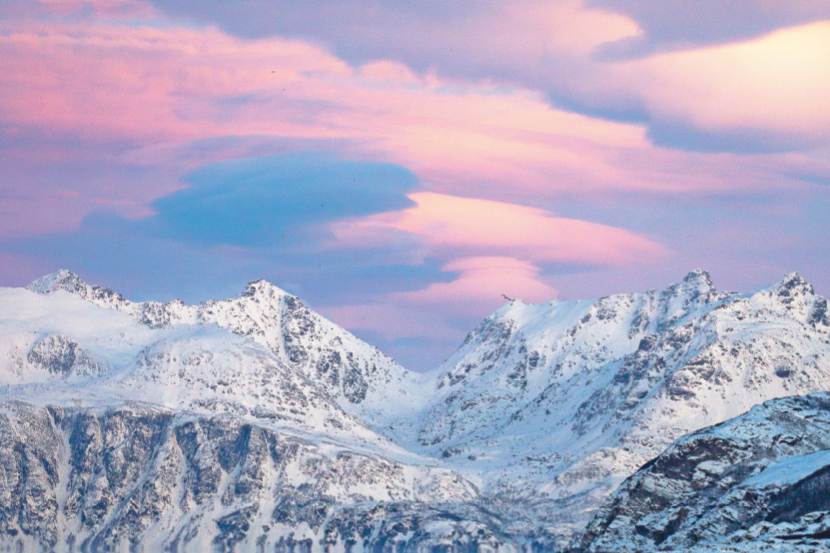
In this part of the world, you won’t find any palm trees or coral cays, in fact, it’s quite the opposite. This is a landscape carved by deep fjords and towering mountains, where Arctic blizzards can deposit metres of snow overnight and comfort levels are stretched. With that said, if you can handle the stinging winds and frigid waters of the Arctic Circle, then you may just come face-to-face with a pod of orcas.
Orcas can travel at speeds of up to 45 km/h, so there’s no time to assemble clunky scuba gear. On this adventure, freediving is the name of the game, and it’s ultimately the orcas that control the encounter. If they do draw close, your encounter will likely be brief. This is undoubtedly an experience for the dedicated diver, especially for those who (like myself) have had a lifelong interest in orcas.
Orcas are smart and their behaviour is fascinating to observe underwater. Each pod has a complex social order, with the oldest females running the show (female orcas can live to 90). These females control the hierarchy of the pod and the security of the young, who remain a part of their mother’s pod for their entire lives. The large male (bull) orcas tend to work the pod’s perimeters with an investigative nature while protecting the females. I vividly remember a time that I came face-to-face with a bull orca. Carefully sliding into the water, I’d hoped to observe a feeding pod from a distance. Immediately, the bull broke away from the pod and approached me head-on. He was about six metres long with a dorsal fin towering at around 1.5m.
His beauty and inquisitive nature had me mesmerised.
Underwater, sound travels four times faster than through air, and orcas rely heavily on sound, especially while hunting. Once you’ve held your breath and dived under, you’ll know that orcas are nearby when you hear their clicks and whistles. It’s likely that they’ll know you’re there well before you can see them. Like bats, orcas make high-pitched noises, and then wait for an echo in order to assess how close something is.
Personally, the sound of orcas communicating underwater is one of the loveliest sounds I’ve ever heard (and felt).
LORD HOWE ISLAND
(NSW, Australia)
Why it’s special
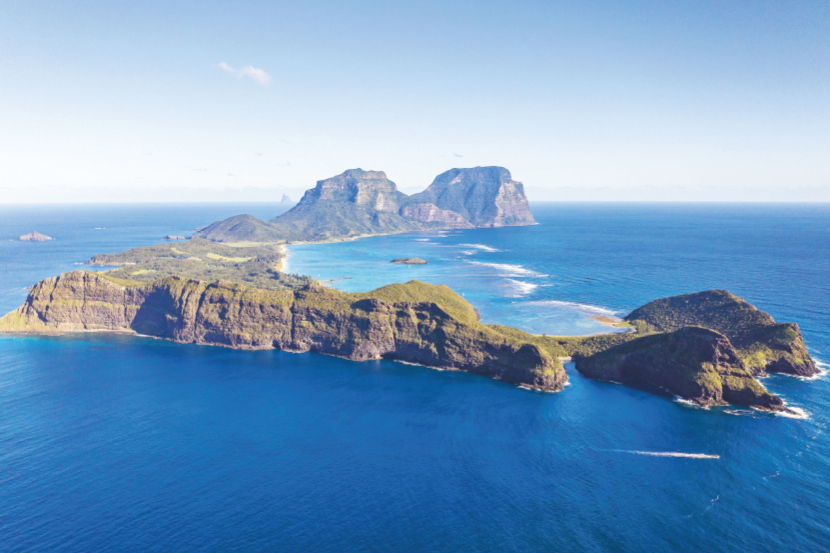
This World Heritage-listed island hosts the planet’s southernmost coral reef, thanks to its position at the tail end of the warm East Australian Current (EAC). Endemic species like the McCulloch’s anemonefish, three-striped butterfly fish, and the odd-looking double-header wrasse all call this remote rock home. The topside views are incredible; steep mountains crowded with kentia palms rise abruptly from the sea, the remnants of an ancient volcanic mountain range.
The magic of Lord Howe Island is omnipresent; from mushrooms glowing in the forests to sprawling soft coral gardens and old volcanic reefs under the waves.
Best time to dive
With a limit of 400 visitors on the island at any time (plus the island’s permanent population of 380), Lord Howe’s dive sites remain uncrowded year-round. The high season runs from October to April, with water temperatures at their warmest from January to March (reaching up to 26°C in March). The island’s only dive centre closes from the 1st of June to the 31st of August, when the water temperature is at its coldest, and high winds often limit diving opportunities.
Dive in
Considering its temperate location, it may seem strange to call Lord Howe a tropical island. Its warm water and tropical fish species can be attributed to the East Australian Current (EAC). Made famous in the film Finding Nemo, the EAC continuously moves warm tropical water from the Great Barrier Reef southward all the way to Lord Howe Island, the world’s southernmost coral reef.
The EAC is just one of the five major ocean currents that intersect at Lord Howe, resulting in an incredible diversity of tropical and cold-water marine species mixed together. Sharks, rays, sea turtles, and shoals of fish thrive amongst temperate green sea grasses and colourful hard and soft tropical corals. There’s also an abundance of rare and endemic marine life here. Add that to the volcanic terrain of caves, overhangs and trenches, plus the local ban on commercial fishing, and you’ll find that this is a marine environment unlike anywhere else on the planet.
With over 100 amazing dive sites surrounding the island, you’ll be spoilt for choice. The following are my must-do’s:
- The lagoon: The island’s fringing lagoon is perfect for that first dive after arriving on the island. It’s also a calmer option for days when it’s rough offshore. Within the lagoon are plenty of soft corals and tropical fish, such as three-stripe butterfly fish, silver drummers, and double-headed wrasse.
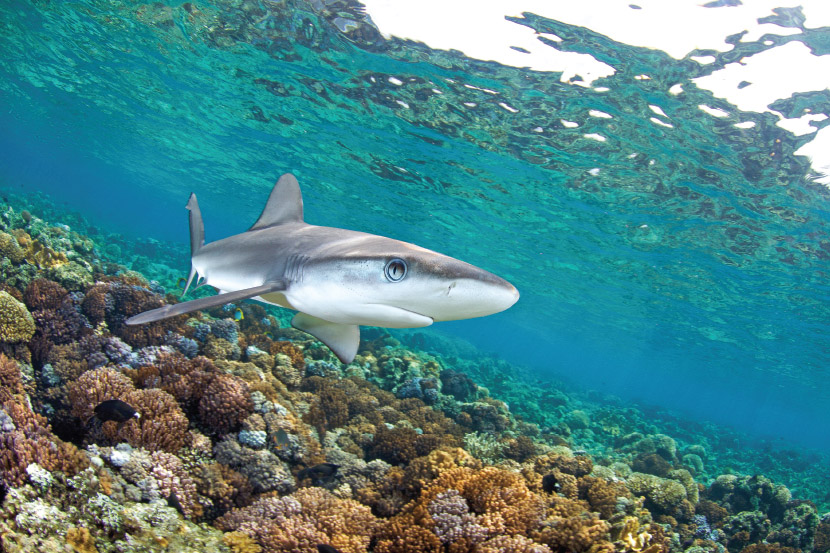
You may also encounter turtles and small Galapagos whaler sharks, whose curiosity and sleek silhouette make them favourites amongst photographers. Being 5–10 metres deep, the lagoon is loved by both snorkellers and freedivers.
I recommend renting a kayak from one of the boatsheds, asking staff to point out some lagoon classics like Erscotts Hole, Comets Hole, or The Potholes.
- The Admiralty Islands: Only a 15-minute boat ride north of Lord Howe Island lie the Admiralty Islands.
These eight volcanic islets are ideal for all divers, with depths ranging from 12–40 metres. Here you’ll find great patches of soft corals, colourful nudibranchs and schools of tropical fish, such as the rare half-banded angelfish.
Notable sites include North Rock, Tenth of June, Rupert’s Reef, and the incredible swim-through of the Eye of Roach.
- Balls Pyramid: The pinnacle of all of Lord Howe Island’s dive sites is Balls Pyramid. Towering 562 metres above sea level, this is the world’s tallest sea stack. There’s a saying amongst the dive staff that ‘whatever you find around the island, you will always find more of, but bigger, at Balls Pyramid’. Resembling a massive shark fin freestanding in the middle of the ocean, the waters surrounding the pyramid are home to a variety of creatures including dolphins, mantas, whale sharks, and the occasional great white. If you’re lucky, you may even see a Ballina angelfish.
Usually found elsewhere at around 100 metres deep, you can spot them here at about ten metres, making this the only place in the world where you can dive with them.
SANTA CATALINA ISLAND
(USA)
Why it’s special
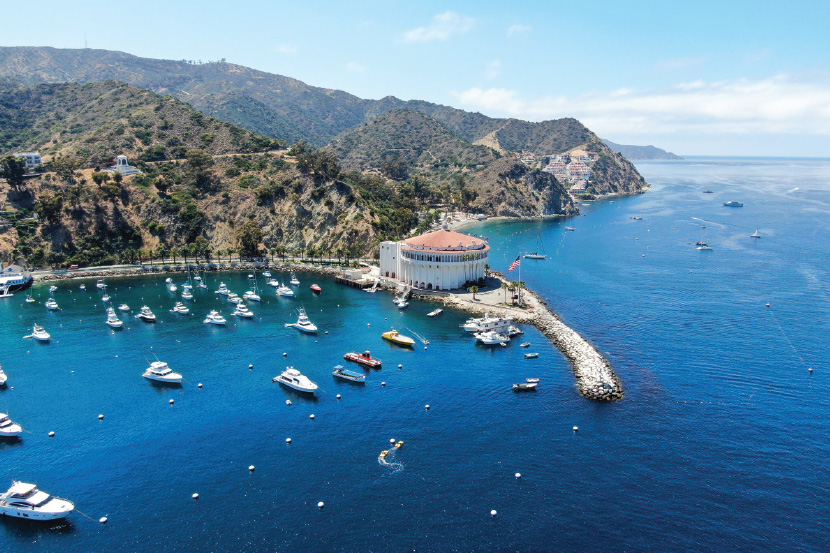
California’s state fish, the Garibaldi, usually prefers a solitary lifestyle, fiercely protecting its two feet of territory. But, every once in a while, in behaviour labelled as a “kelp social”, they’ll have a friendly get-together to check each other out and potentially choose mates. Once a popular aquarium fish, they’re now protected in California, but you can find plenty of them living amongst the towers of kelp found here. Just an hour by fast ferry from Long Beach, this island is a fascinating destination. Kelp forests create a multi-tiered haven of life from the sea floor to the surface. Divers may spot friendly California sea lions, leopard sharks, lobsters, crabs, nudibranchs, or an elusive giant black sea bass.
Best time to dive
The prime time to explore the kelp forests is from late summer to early autumn when the water is at its warmest and visibility is best. This season also coincides with the migratory patterns of several marine species.
Avoid weekends, if possible. Preferably, visit between October and April, when there are fewer divers.
Dive in
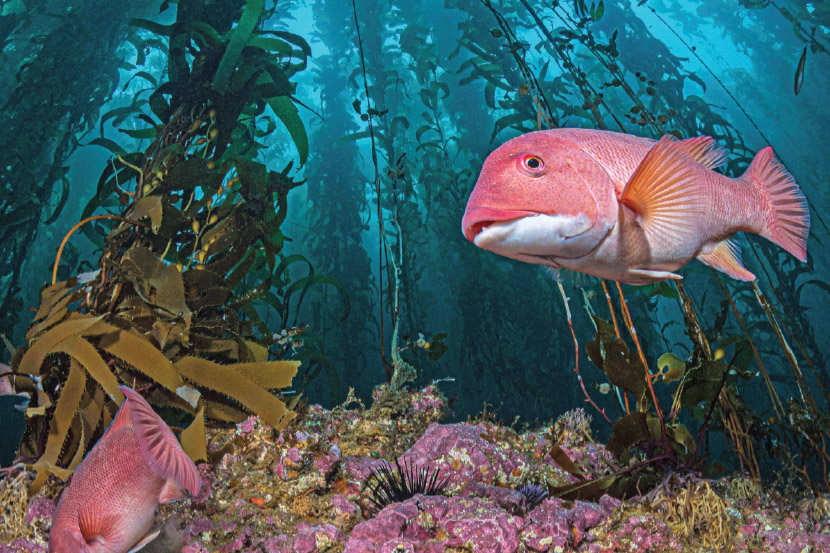
Here in the Pacific Ocean, this island is surrounded by a very special underwater environment. Forests of kelp create a vertical maze of biodiversity, providing a home to a wide range of species.
Catalina’s kelp forest is dynamic, with fronds growing almost before your eyes. Able to grow up to 60 centimetres a day, they are the fastest growing plant in the sea.
With an average water visibility of around 10–15 metres, or up to 25 metres on a really good day, divers can spot plenty of fish and other marine life amidst the towering marine flora. Schools of silvery jack mackerel dart between the kelp while curious harbour seals play peek-a-boo.
It’s not uncommon to come across the spiny California scorpionfish camouflaged against the seabed, or lobsters in the crevices of the rocky reef.
One of the highlights of a dive in Catalina is spotting an iconic Garibaldi, aka the Catalina goldfish, named after the Italian general Giuseppe Garibaldi whose signature style was a bright red shirt. Growing up to 35 centimetres long, Garibaldis like to eat sponges and algae, plus nudibranchs and tubeworms. Usually found on their own, these red-orange damselfish with heart-shaped tails create a striking contrast against the kelp. If you wear orange gloves, or have bright orange equipment, you might attract one of these fish to you, who may even be cheeky enough to nip you in an effort to ward you away from his territory.
For macro enthusiasts, the kelp forest is a treasure trove of biodiversity. Nudibranchs, with their flamboyant colours, decorate the kelp leaves, while crabs and snails navigate the sea floor with ease. A keen eye will spot intricately patterned sea stars, bat stars, and brittle stars colouring the ocean’s floor, further adding to the aquarium vibes.
This is also a vital habitat for juvenile fish, providing shelter and food as they grow. The juveniles of many open water species, such as opaleye and blacksmith, find sanctuary within the kelp, highlighting the importance of these forests for the life cycle of ocean fauna.
Ready to dive deeper? Pick up a copy of Ultimate Dive Sites by Todd Thimios published by Hardie Grant Explore