Mix tones, textures, and treasured pieces to create a maximalist aesthetic with these top tips from an interior designer.
If you’ve ever wondered when the interior design world’s obsession with beige was going to end, you’re in luck.
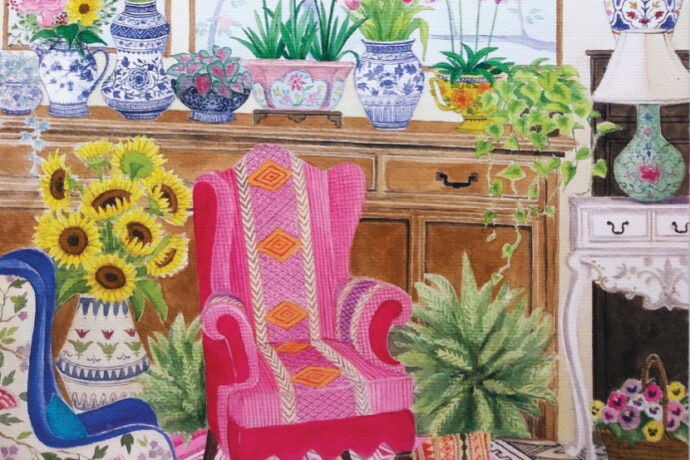
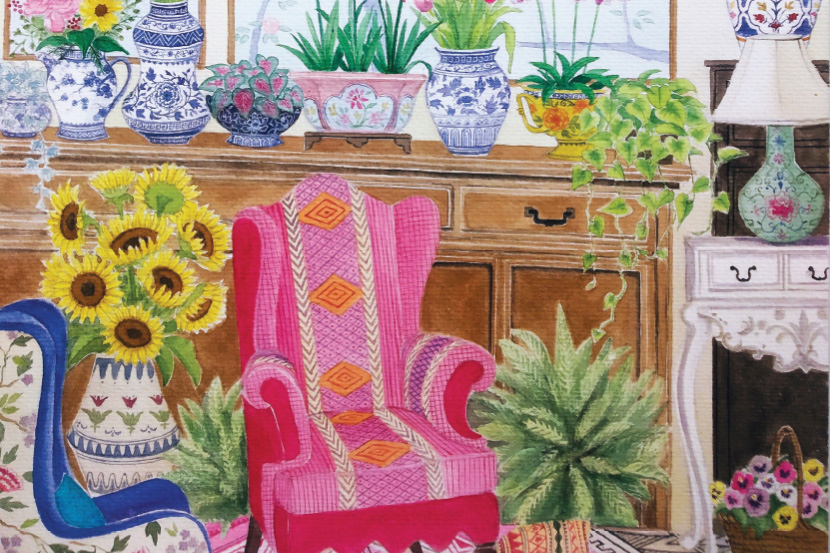
The new trend on the block is maximalism, and it’s about as far from beige as you can imagine. Think jewel tones layered with bold prints, mismatched paintings hung salon-style, and carefully displayed objets d’art.
It’s the antithesis of the bare walls, neutral colours, and empty surfaces of minimalism, and while the pared-back look was hailed as a harbinger of calm, the new eclectic approach can be equally as good for the soul.
What is maximalist interior design?
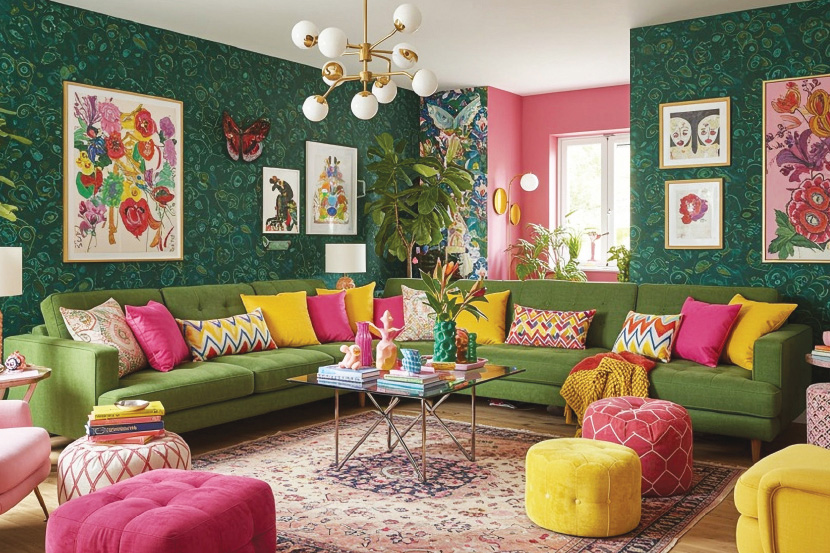
The trend is evident on social media, where collections of 1970s glass vases can be seen carefully positioned among rows of books and artefacts, and living rooms are furnished in velvet and leopard print and lined with landscape paintings. But the appeal of maximalism, which seems to lie in its blend of precision and chaos, is far from modern. It’s a style that’s appeared in various guises throughout history.
The emotional power of personal style
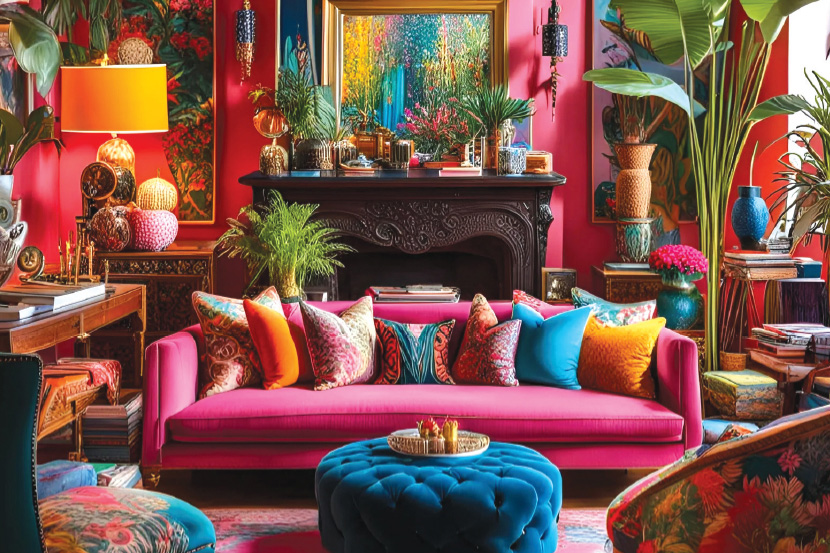
This smorgasbord aesthetic is part of maximalism’s charm and, according to interiors journalist and stylist Alix Bateman, a phenomenon that’s come and gone over the centuries. ‘There have been different reasons for its various incarnations through the years,’ says Alix, pointing to the 16th-century fashion for explorers to display curiosities and stuffed-animal trophies from their travels in their homes. ‘Then, in Victorian times, it was a status symbol,’ she says. ‘It was about displaying your wealth.’ Although not necessarily a sign of status, the maximalism of today puts personality centre stage. ‘It’s a style that’s comforting,’ says Alix. ‘It has warmth. And it should be a reflection of who you really are.’
This is in contrast to minimalism – a look that’s austere and hard to maintain. Part of maximalism’s appeal is the freedom it affords: ‘It’s about learning to please ourselves and letting go of concerns about whether we’re displaying the correct breadboard or rustic earthenware mug.’
Award winning interior designer Holly Scott cites the 2020 pandemic as a potential reason for an upsurge in maximalism, and emphasises the trend’s capacity to soothe (see overleaf). ‘After those stressful years, we were all craving some fun and optimism in our lives’
Maximalism vs clutter: know the difference
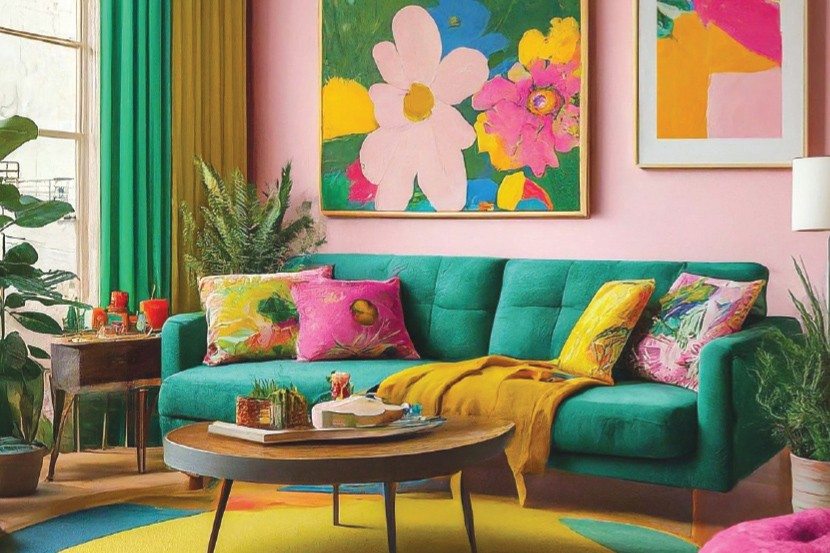
There’s an intentional feel to the maximalist approach.
It’s about being discerning in terms of how you curate your home. And this point, says interiors therapy expert Suzanne Roynon, is key in distinguishing it from hoarding. ‘Possessions have a tendency to trigger memories. That’s why it’s important not to cling to items just because they fit a particular scheme. In fact, doing so can be harmful to your wellbeing,’ says Suzanne, giving the example of keeping a beautiful gift from a past relationship on display just because it was expensive or is on trend.
Sustainable style with a story
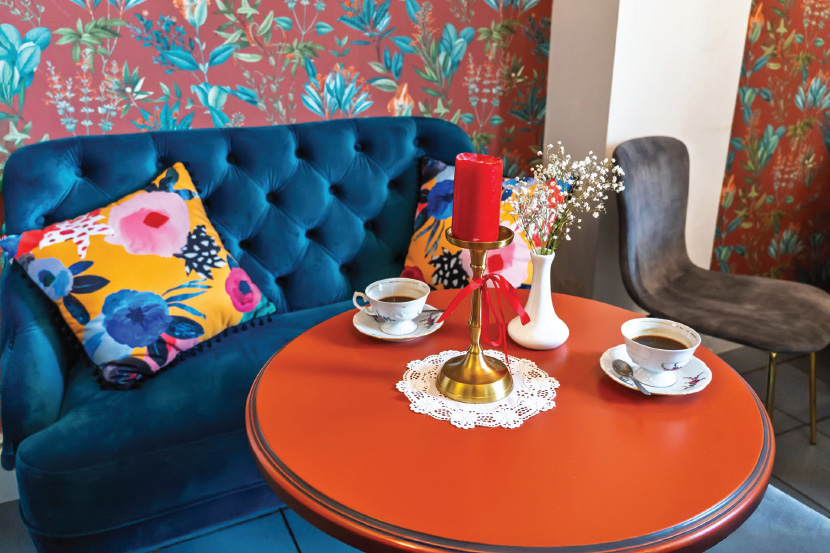
So how can this trend be incorporated into the home sustainably? ‘Achieving maximalism is not about online shopping until you max out your credit card,’ says Alix.
‘It’s about having the confidence to make your own choices. Use your instincts to know that a garage-sale poster, a needlepoint from your grandmother, and a completely clashing pile of cushions of varying colours, shapes, and patterns will look absolutely awesome together.’
Alix suggests scouring second-hand furniture stores, vintage markets, and charity shops. ‘Just know that contrast is key,’ she adds. ‘So, mix up treasured items you already own along with ones you’ve sourced in different shapes, sizes, colours, and eras for the biggest impact.’
Remember that this style is supposed to be playful – an antidote to the serious, simplistic look of minimalist interiors. But its most endearing characteristic is the way it nurtures the soul. Think of it as the design equivalent of comfort food. It comprises all your favourite textures and its ultimate goal is to make you feel good.
Create a maximalist home that reflects your style
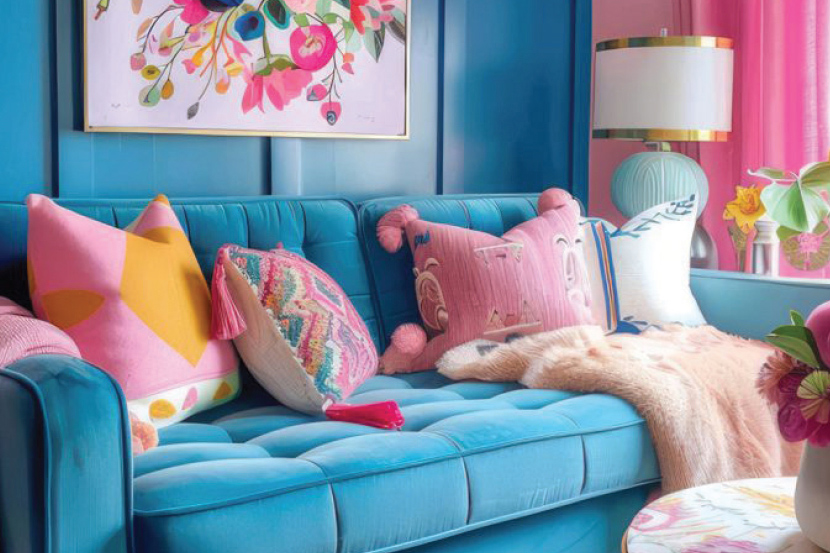
Interior designer Holly’s five top tips for incorporating the look in your home:
1 Make sure it brings joy
Start with a piece you already own that you love. It could be a painting or vase, or even a particular fabric.
Think of this as the first building block in your maximalist scheme and begin adding elements that feel good to you. They don’t have to match. In fact, clashing colours can work wonderfully.
There just needs to be an element of balance.
2 Start small
I love bold maximalist designs in small spaces, such as a powder room.
This creates a fun talking point, without being too overwhelming. But limiting this look to selected areas in a room also works well. Take a maximalist approach to some open shelving and show off mismatched vintage vases, or style your coffee table with bric-a-brac, holiday finds, and piles of books.
3 Use colour psychology
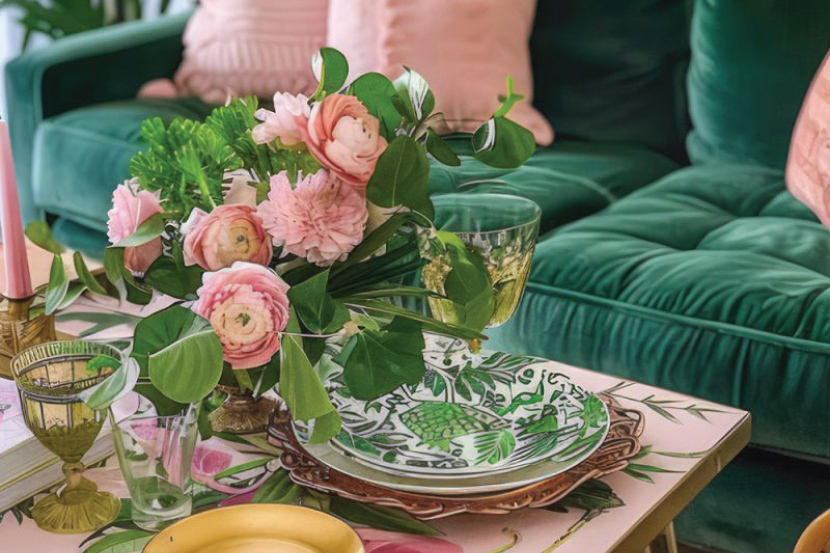
Choose your colour palette to reflect how you want to feel in the room you’re creating. For example, yellow is associated with creativity, green represents healing and nature. Choose three colours that you’re drawn to and base your room around them. The 60-30-10 rule (where one colour is used for 60 percent of the room and the other two 30 percent and 10 percent) works well.
4 Layer for the look
Use rich fabrics, such as velvet, and materials like gold, wood, and marble. Don’t be afraid to mix different patterns in one room. For example, on your rugs, cushions, window treatments, and wallpaper.
It’s all about layering different designs, textures, colours, artwork, and artefacts. And don’t forget to add in houseplants for added interest.
5 Mix old, new, and found items
Whether it’s your grandma’s chair (which you could re-cover), an upcycled sideboard, fun vases, mirrors, or art found in op shops, there’s something special about using items that have a rich or meaningful history alongside newer pieces or things that you already own.
WORDS: Yvonne Gavan