Life’s highs and lows can be overwhelming, but growth often takes root in the still, in-between moments. Explore how embracing that space can offer clarity, healing, and meaning.
It’s tempting to want to eliminate the bad bits of life – who wouldn’t want to experience the refreshing change that comes with moving house or changing jobs without feeling loss, or youth without the effects of ageing, and relationships without conflict? It’s understandable. After all, in an ideal world, life is supposed to be easy, isn’t it?
The reality is that being human is more complicated than most people are led to believe. In societies where beauty, career, and what constitutes a good life dominate the narrative, it’s easy to be unaware of the power they wield or the emotional impact they have. The latter is something I’ve been experiencing firsthand as I prepare to move with my family to a developing country on the other side of the world. It’s a big work move – our third in nine years – and is part of my chosen way of life. Though it’s still something I find hard, particularly when I compare myself to my peers, who seem settled and inhabit the culture I so miss, while also avoiding the struggles of life overseas. They seem to be living a good life.
Seeing two sides to every moment
I find that I’m increasingly using words like “dreading” and “struggling”, until, to my surprise, a new friend describes my upcoming move as “so invigorating”. And I stop in my tracks, considering what it would feel like to look at my situation differently – truthfully, but also more expansively, as both lacking in certain opportunities and presenting new realities. I wonder, then, if more people could benefit from adopting a more flexible approach to the vast terrain that is lived experience – upheavals, conflicts, losses and all.
How cultural narratives shape our emotions
Most people, however, are so enmeshed in their dominant cultural narratives that they rarely see them for what they are: stories. I’ve struggled to challenge the narrative that happiness and security only come when you allow yourself to put down roots. But there are others, like the story that insists humans always need to be around others to feel content.
‘Every truth has two sides; it is as well to look at both, before we commit ourselves to either’ – AESOP
From childhood fairy tales to films that depict periods of time alone as both scary and strange (think Rapunzel, Taxi Driver, and Her) and something only enjoyed by mavericks and monks, it’s an idea that’s become embedded in some cultures’ psyches. But according to podcaster and author of Alonement: How to Be Alone and Absolutely Own It,
Francesca Specter – whose concept values solitary time as much as that spent with others – being alone can be both isolating and fulfilling, fearful and free. It can be both.
She questions why someone should wait for a partner or group of like-minded friends to watch the latest cinema release or visit a country they’ve always longed to see.
Her list of things she missed out on as a result of being afraid to spend time alone includes home-cooked meals for one, visiting galleries, journalling, and travelling the world. All activities she now happily does alone.
She cites “solitude skills” as something to cultivate in order to know and understand yourself better. Now, rather than being scared of quietly sitting with her own thoughts, Francesca says she’s come to view the interior of her mind as a rich and fruitful place. Somewhere that can feel both complicated and interesting.
Why we need different perspectives
Before starting to scrutinise the stories and narratives that society projects onto people, however, there’s a need to entertain the idea that every difficult thing a person goes through contains a thread of hope, in the same way that every positive experience has a shadow side. Because if people allow themselves to feel painful emotions alongside more pleasurable ones, the meandering path of life, with all its twists and turns, might become a more rewarding one.
According to psychologist, TED speaker, and author of Emotional Agility, Susan David, difficult emotions are needed for a person to survive and understand their place in the world. And while many live in societies that suggest they should be constantly positive, all emotions have value because they send signals about humanity’s sense of purpose and meaning in the world. To witness the full spectrum of emotions, people need to feel comfortable with their feelings. And this, according to Susan, is something that may or may not begin in childhood.
She says that, in the home, children are taught “display rules” by their families of origin. These give a sense of which emotions should and shouldn’t be shown, learned largely by osmosis, but also through phrases such as “Go to your room and come out with a smile on your face”.
Exploring emotional agility on The RobCast, hosted by American author and public speaker Rob Bell, she adds: ‘Our thoughts, emotions, stories, and the relationship we have with them [and] the way we deal with that messy stuff internally drives everything. Every facet of how we love, live, and lead.’
How to pause before you react
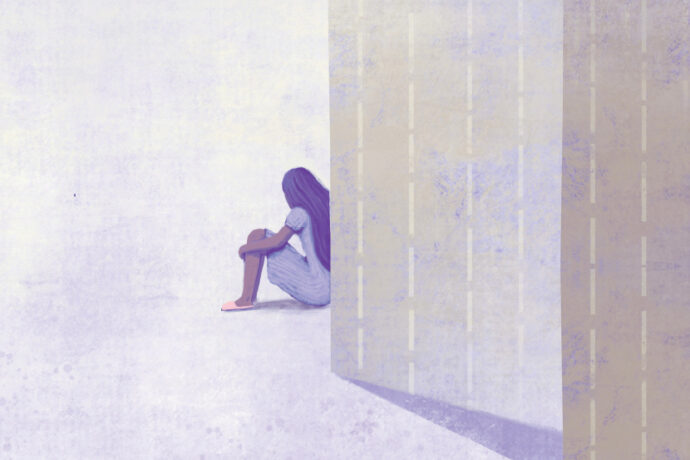
People can only begin to challenge the stories they’re handed and gain perspective on emotions – before deciding which course of action to take – by learning how to pause. To do this requires noticing the space between feeling and acting.
‘Our thinking needs to explore that space between, which some call the space of possibility.’ This is crucial because, according to Susan: ‘Our emotions don’t make us decide what to do. The stories we have imbibed don’t tell us what to do. We decide what to do, through our values.’
Choice, then, is important when it comes to the way people describe the experiences they go through and the resulting feelings they have. Every difficult situation might bring growth, just as every so-called positive event might have a potential dark side. And that’s okay. Because being human is complicated, that’s the way it’s supposed to be.
So, the next time you go through something, however big or small, remember there’s always more to it than you think – and it’s all about the space between.
WORDS: Yvonne Gavan