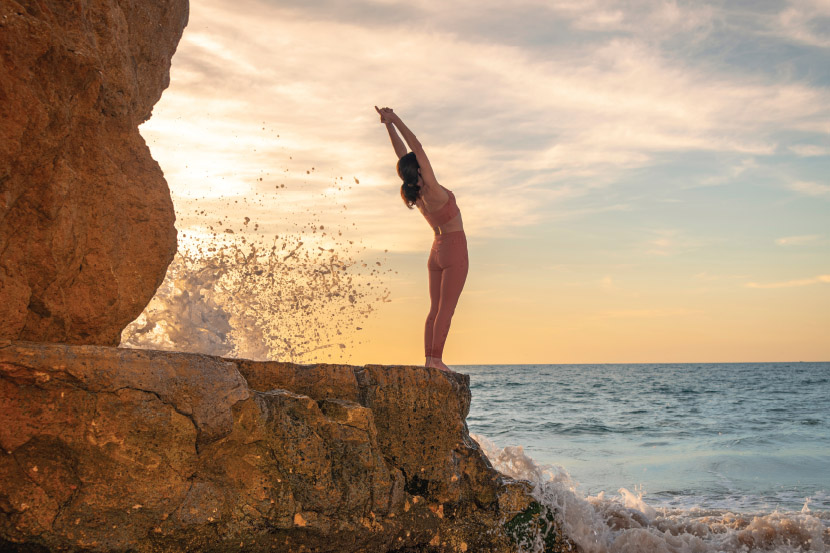
There are many benefits to be gained through maintaining good balance. Here, we look at five plus points and share a step-by-step yoga pose to improve your balance.
The benefits of balance
1 Physical strength.
A well-balanced body is a stronger body – one that’s better equipped to perform everyday tasks with greater ease. Incorporating balancing exercises into daily life strengthens all the major muscle groups, which can help to improve performance in sports and other physical pursuits, as well as prevent or speed up recovery from injuries.
2 Confidence
Improved physical and mental strength provides an excellent foundation to try new activities and the confidence to interact and engage with the world.
3 Posture
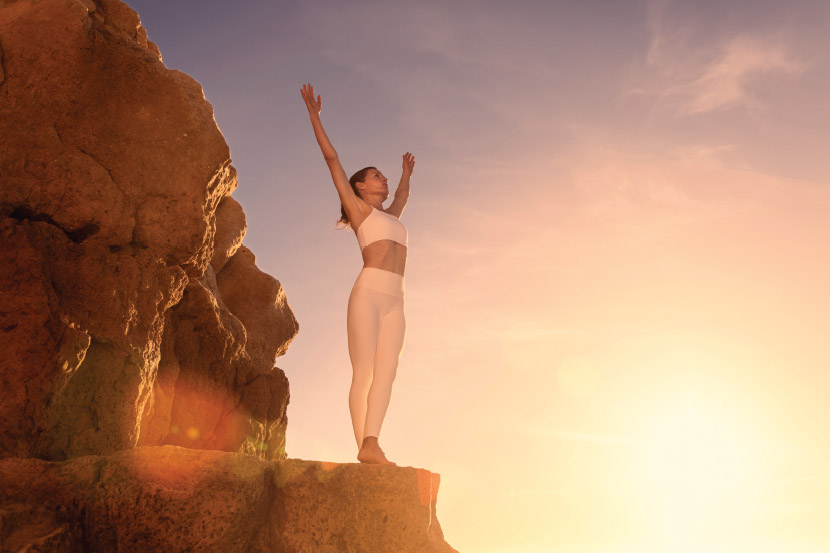
Observe the perfect posture of a child: a natural form that’s blissfully uncompromised by the physical trials and tribulations of later life. Good balance involves the body working in harmony to regain and maintain this natural form. This exercise can help: in a standing position, visualise a golden thread gently lifting the crown of the head to the sky while you extend through a straight yet relaxed spine to the tailbone, with relaxed shoulders and feet confidently grounded through strong legs.
4 Coordination
Balance training involves challenging a range of physical and mental functions to work together, to develop the ability to combine and coordinate different activities. This will naturally translate into everyday life.
5 Focus & concentration
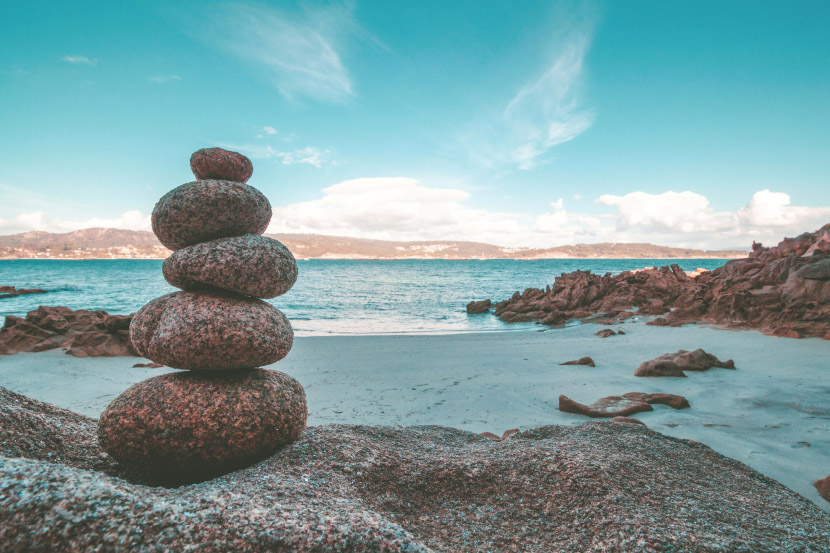
Directing and maintaining attention on targeted balancing exercises requires concentrated effort, which can help to remove distractions and enhance the ability to focus in other areas of life.
A step-by-step guide to the high lunge yoga pose
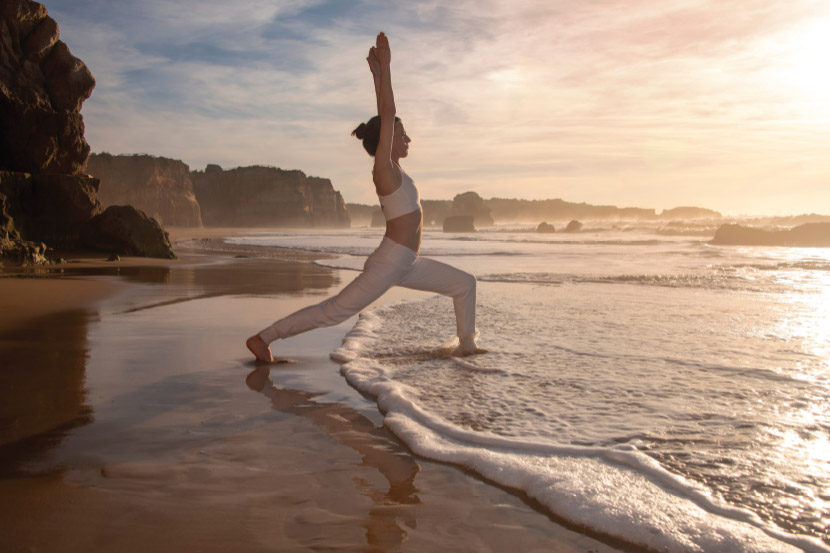
There are many different styles of yoga, all providing a wonderful range of movements and poses that will help to improve balance. Most poses offer a range of options that can suit everyone, from absolute beginners to seasoned practitioners. High lunge (also known as Crescent Lunge, or Ashta Chandrasana in Sanskrit) is a standing pose that provides a full-body experience, making it perfect for improving balance and stability while also strengthening the entire body.
- Start in Tadasana, also known as Mountain pose.
- Take a step forward with the left foot so that the feet are around a metre apart, keeping the hips, upper body, and feet facing forward.
- Bend the left knee, lowering the upper body while ensuring the knee does not extend beyond the ankle, with the right heel lifted off the ground.
- Gradually start to guide the right heel towards the ground (though don’t force the right leg straight – it’s better to maintain a slight bend and softness in the knee to avoid overworking the muscles). The right heel does not need to touch the ground, just extend towards it.
- Visualise grounding down through the hips but avoid collapsing into the lower body.
- Visualise the golden thread (see point 3 on the previous page) gently lifting the crown of the head to the sky, creating lightness in the upper body, and a gentle elongation from the waist up.
- Take a little time to stabilise before choosing the most natural position for the arms. Either keep them by your sides with fingers pointing down, gently resting hands on your hips, or slowly raise them overhead with the palms facing up towards the sky. Try experimenting with all three and progress as confidence and balance improves.
Remain in the pose for around five deep breaths before carefully reversing the movement and repeating on the opposite side. As balance improves, hold for up to 10 breaths on each side.
As with all forms of movement, take great care to move within the limits of your body and stop immediately if you experience any pain. Always seek advice from a doctor or experienced physical therapist if you’re unsure.