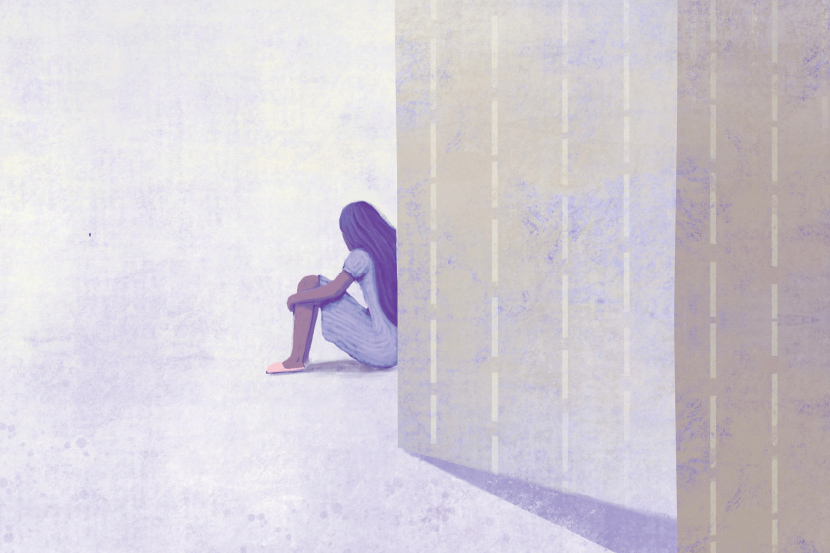
Are you on the edge of openness? Explore how to build a path to understand and broach the subject of stonewalling.
Communicating involves sharing views, thoughts, and feelings with others, with the intention of creating a shared understanding about a situation or issue, or of deepening a relationship. Most people have characteristic patterns in how they communicate. Often learned in one’s family of origin and strengthened with time and life experiences, they’re used in all forms of relationships – with romantic partners, friends, family, and colleagues.
Some patterns are positive, such as respectful disagreement or assertive communication. Others, however, are more difficult and less helpful.
When one person shuts down
One of the more challenging patterns is stonewalling.
This involves a refusal to communicate – for example, when someone shuts down during an argument and says: “I don’t want to talk about this” or “There’s nothing left to say”. It’s difficult for those on the receiving end, resulting in confusion, anger, hurt, and the feeling that their emotions haven’t been heard or their needs met.
Why stonewalling happens
Stonewalling often occurs because it’s difficult to communicate complex and painful emotions. It might seem easier to ignore a problem or worry, instead of talking openly, especially if overwhelming feelings are involved. Equally, it might be a case of lacking the courage or communication skills to have difficult discussions, in which case avoidance can appear a suitable alternative.
Some, however, shut down when they’re overwhelmed, a response that’s common with people who experience anxiety or are neurodivergent. And it’s important to keep all these hypotheses in mind, as no one should be blamed or shamed when exploring this pattern of communication.
Stonewalling as a learned pattern
Stonewalling takes on different forms, including changing the subject, walking away each time a conversation arises, using dismissive body language (eye rolling, shrugs) and making accusations – for example: “You always do this” – instead of talking openly. The crux, however, is a withdrawal of communication. The behaviour tends to be a learned pattern and might occur if a person has previously been punished for expressing their views or become used to denying and repressing their own needs and feelings, which makes the idea of discussing anything openly in the present feel psychologically threatening.
It’s typically a way to avoid the fear of conflict.
When silence is about safety
There are other occasions when safety issues, such as when someone is abusive or consistently disrespectful, might mean it’s physically or psychologically unsafe to communicate. At these times, stopping communication might appear the wise option. Some relationships might also be characterised by mutual avoidance, where all parties are uncomfortable with talking about difficult subjects and unconsciously and silently collude to ensure certain topics are off-limits or that challenging conversations end before they begin.

How stonewalling affects relationships
Essentially, the main difficulties with stonewalling reside in how it leaves people feeling, and the impact on relationships. When a person is repeatedly stonewalled, they can be left feeling angry, resentful, confused, or hurt.
Over time, it creates inauthentic relationships, where it’s difficult for emotional needs to be met because the lack of meaningful communication impedes the conditions for true closeness. Stonewalling often halts this, leaving both parties dissatisfied and lonely.
How to gently address stonewalling
If someone wishes to change this pattern, the first step involves recognising and naming it. Often, the person being stonewalled is the first to observe the behaviour, while the other party is unaware of what they’re doing.
It’s helpful to broach the subject – and name it – during a time of calm when no one is feeling defensive, and best to avoid raising it during times of conflict. Use a non-judgmental or non-blaming phrase, perhaps: “Sometimes, when we talk about difficult things, I’ve noticed you withdraw and shut down completely.
This makes it difficult for us to communicate openly and I can feel frustrated because we never resolve issues. Have you noticed this, too?”
It’s beneficial to have an open and curious conversation about the subject with the intention of trying to explore and understand each other’s viewpoint and find a way to be closer, instead of blaming or shaming anyone for their actions. It’s also important to bear in mind that the opening discussion could be challenging for someone who resorts to stonewalling. It might even have to extend, in a staged manner, over a few occasions.
Small changes to rebuild communication
Thinking of ways in which both the person stonewalling and the person being stonewalled can communicate with each other when this pattern occurs is helpful. Naming the pattern when it comes up is key, so a conscious decision can be made to step away from this behaviour and toward honesty and closeness. Using a hand gesture, or even saying something along the lines of: “I feel you shutting down” or “I feel myself shutting down”, can be constructive.
It’s also useful to think of how to support the person who is feeling overwhelmed by the conversation. This might involve taking a quick break to recalibrate, stopping to hug, having the conversation while walking or driving, or agreeing to pace the conversation.
Moving from disconnection to understanding
Ultimately, resolving stonewalling requires curiosity, acceptance, and non-defensiveness from all parties, as well as the capacity to navigate closeness and separation carefully in the relationship. It isn’t easy and it will take time, but from that first step and that moment of recognition, it’s possible to move forward to a shared understanding.
WORDS: Ahona Guha