Roses have long inspired artists with their beauty and symbolism, standing as one of nature’s most timeless and evocative muses. Take a journey through iconic artworks that feature the rose’s enduring beauty.
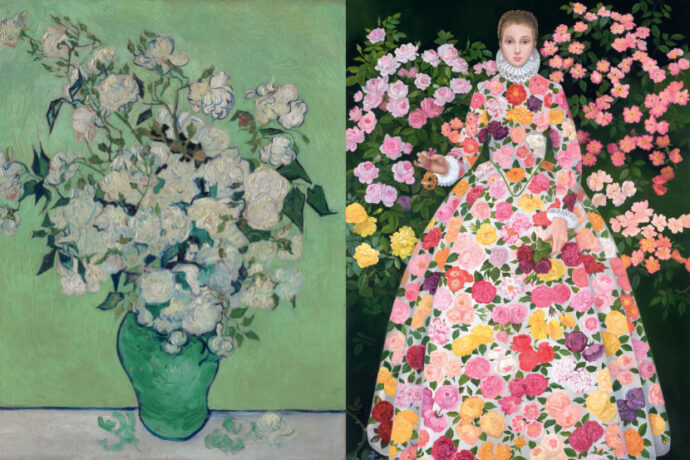
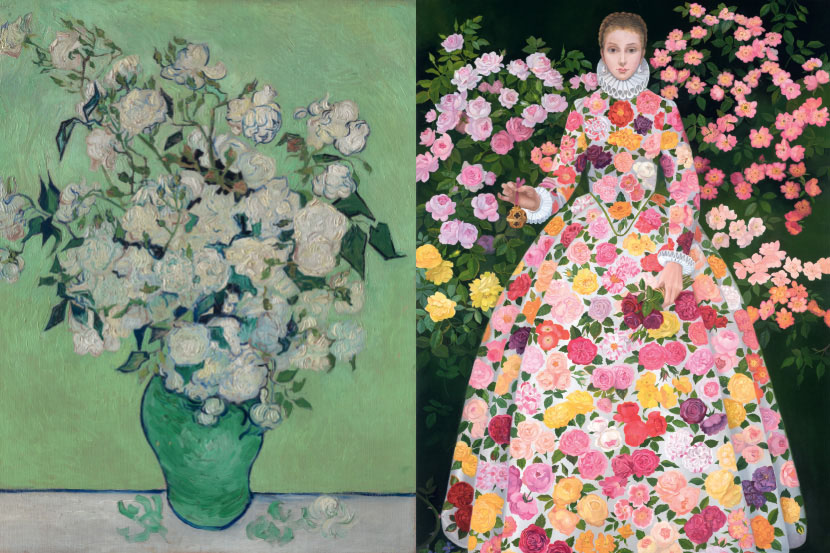
Roses, 1890
Vincent van Gogh
Oil on canvas
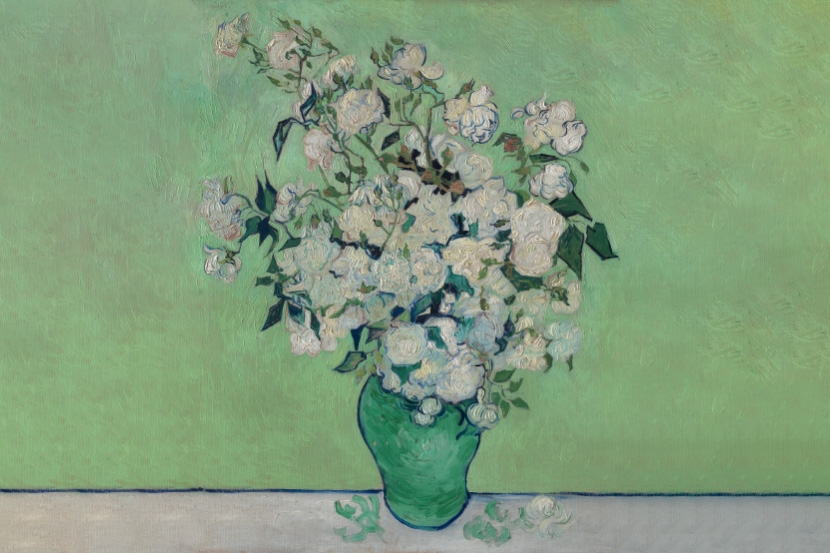
This floral still life of pale pink roses in a green vase is one of a series that Van Gogh produced just before the end of his yearlong stay at the Saint-Rémy asylum.
In his distinctive style and impasto technique, bold blue lines define sections of the composition, contrasting with the softness of the flowers. Spent petals and dried leaves rest on the tabletop, a reminder of the bouquet’s ephemerality.
The Rose Dress, 2021
Lizzie Riches
Oil on canvas
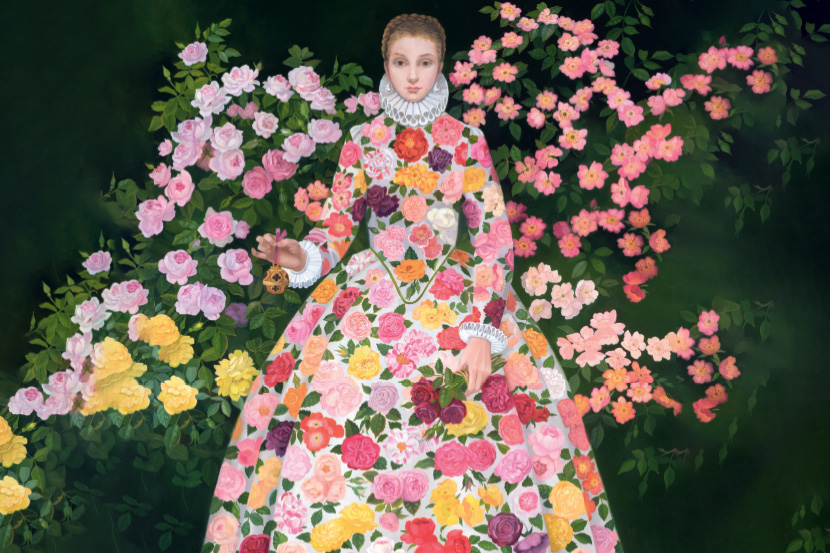
This striking painting was specially commissioned by French perfume house Fragonard. A modern reinterpretation of a traditional Elizabethan portrait, it shows a young woman dressed in an ornate 16th-century-style gown, complete with collared ruff and large teardrop earrings of shiny pearls.
Each rose on the dress is unique, from wild red roses to Centifolias in full bloom in an array of hues.
Arrangement, 2023
Natasja Sadi
Sugar flowers and fresh roses
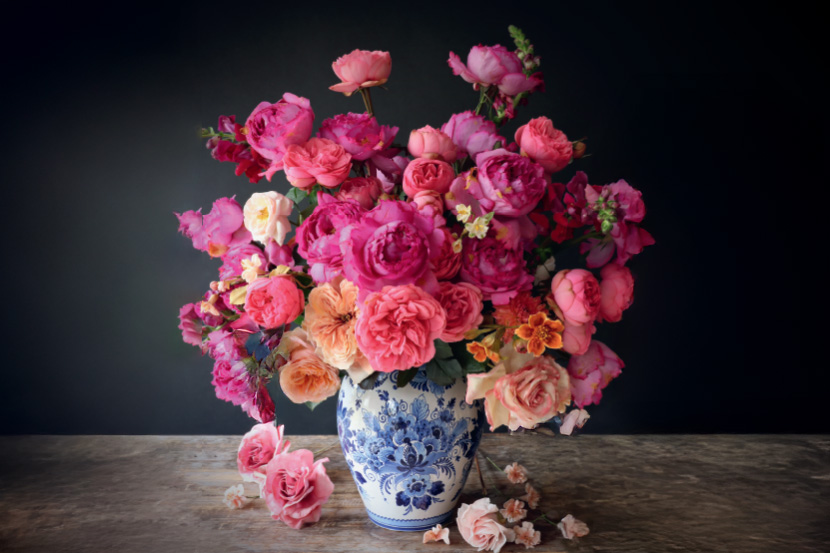
This stunning arrangement is as rich and dramatic as any Dutch still-life painting. Yet each bloom in this photograph is edible, made entirely from sugar. Sadi has mastered the sculpting and colouring of cultivars at all stages; from buds and blossoms to wilting and decaying petals, each is rendered with remarkable verisimilitude.
Her art runs deeper than simply celebrating the beauty of flowers. For Sadi, her sugar sculptures honour her African and Indonesian ancestors, who laboured as slaves and contract workers on the sugar cane plantations of Suriname, a former Dutch colony in South America.
‘Creating sugar flowers and floral arrangements in the Dutch style has been one way of breaking uncomfortable habits of silence,’ reflected Sadi.
The Roses of Heliogabalus, 1888
Lawrence Alma-Tadema
Oil on canvas
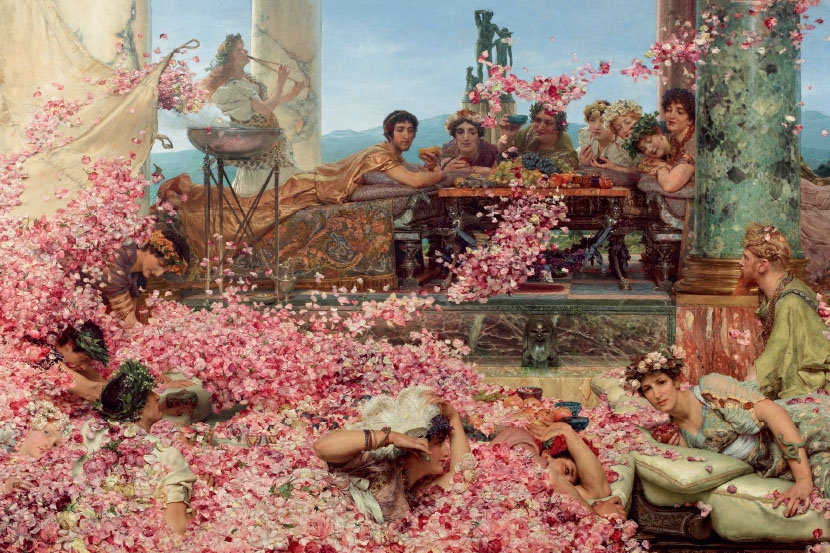
According to the Historia Augusta, Emperor Heliogabalus had a banqueting room with a reversible ceiling that could be turned to shower flowers on the guests. The story goes that he once rained down so many petals, “that some were actually smothered to death, being unable to crawl out to the top.” Lawrence Alma-Tadema caused a sensation when he exhibited The Roses of Heliogabalus in 1888. Its colours, its unorthodox composition, and the blank, affectless faces of the guests puzzled viewers, with The Observer reporting, “the girls smothering under the rose leaves do not seem to mind”. Did the painting portray an amusing prank or a sadistic exercise in murder? The second interpretation became standard, and many were outraged by the lack of morals the artwork displayed.
Flower Flash, 2019
Lewis Miller
Floral installation
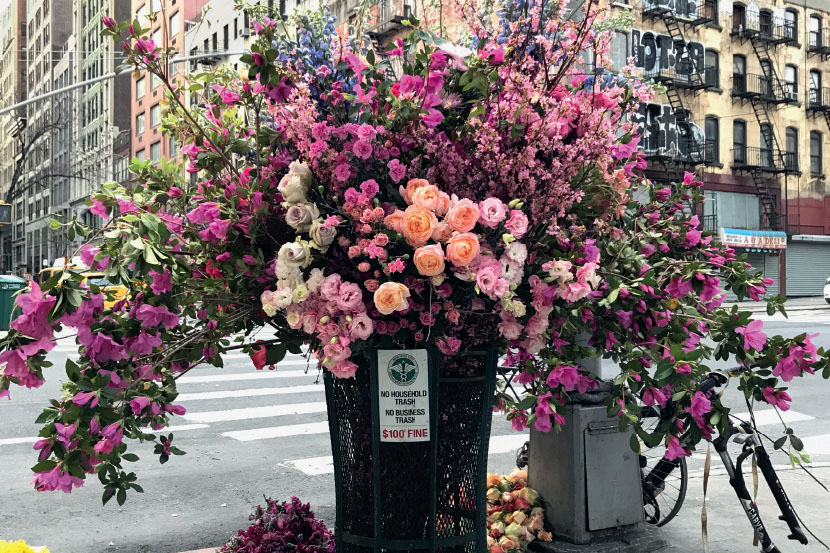
The rubbish bins of New York can hardly be described as attractive. This photograph captures the explosion of colour that greeted passersby on the corner of West 22nd Street and 7th Avenue in Chelsea one bright spring morning. An abundance of pink, white, and peach-coloured roses at the heart of the display are accompanied by an array of seasonal flowers, while more roses lie on the footpath. The arrangements, installed secretly and without permission from the city, are created before dawn. Miller and his team work fast, using leftover blooms from his floral-design company.
Rosai Changelier, c. 2020
Carrara Glassmakers
Glass
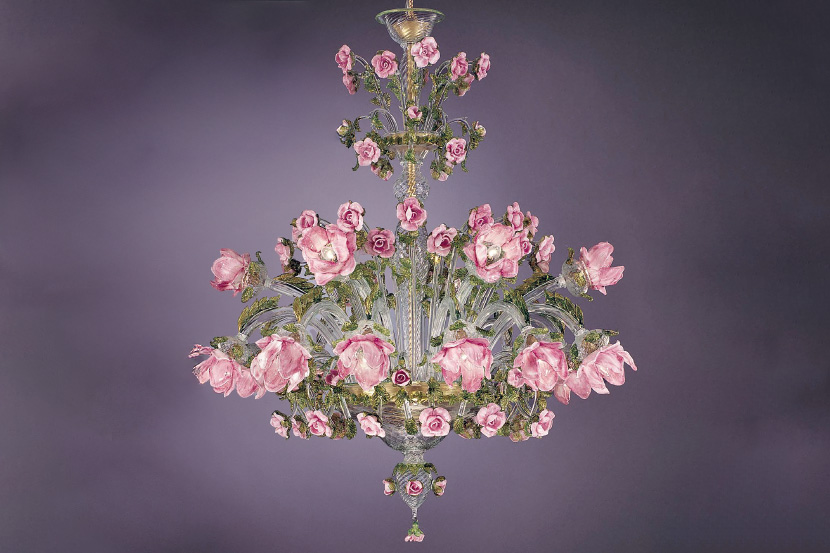
A large salon in a Venetian palace overlooking the Grand Canal is perhaps the most suitable setting for this spectacular rose chandelier. This floral light fixture was handmade on the neighbouring island of Murano by the factory Carrara Glassmakers, embodying the exuberance of the world-famous Murano glass, which has been made there since the 13th century. The pink roses are shown in varying degrees of flowering from tight buds to full blooms, and each was handcrafted individually before being added to the chandelier.
Roses, 1893
Peder Sevrin Krøyer
Oil on canvas
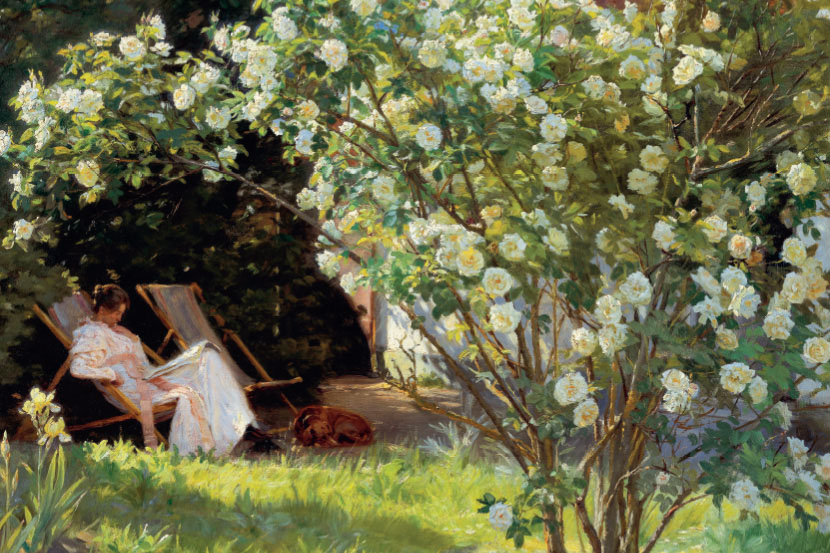
The stunning ‘Alba Maxima’ rosebush dominates the image of an idyllic summer’s day in the cottage garden where the artist and his wife stayed in the Danish seaside town of Skagen. The white rosebush, with its exuberant blooms, obscures the house. Behind the rosebush, the artist’s wife sits in a deck chair with their dog by her side. Krøyer’s seat on her left is empty because he is busy painting. Known for its fragrance, ‘Alba Maxima’ flowers for a brief period once in the summer, and here Krøyer captures it at its peak, laden with blooms and dappled with sunlight.
Rose Trellis Egg, 1907
Fabergé
Gold, enamel, and diamonds
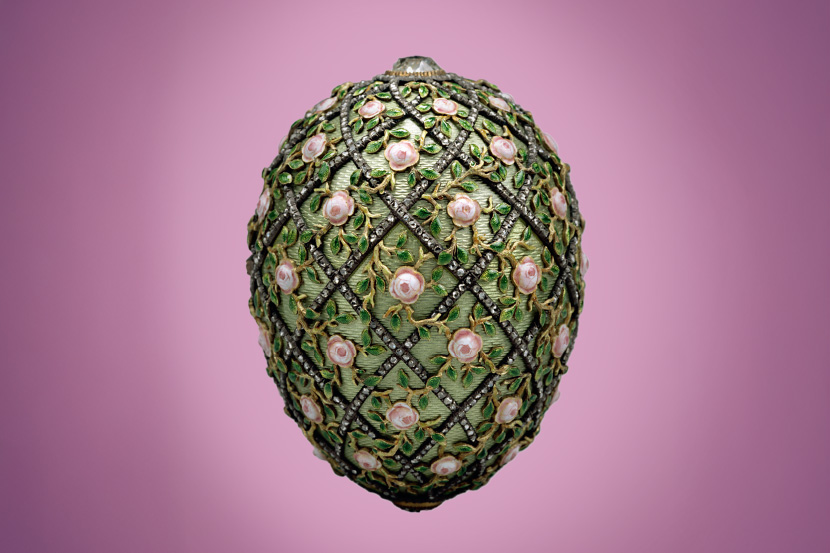
Tiny enamel roses in shades of light and dark pink stud this diamond-encrusted green enamel egg, which was given by Tsar Nicholas II of Russia to his wife for Easter 1907 to celebrate the birth of his heir. The tradition had started in 1885, when Alexander III, Nicholas’s father, commissioned Fabergé – the Russian jewellery manufacturer – to make an Easter egg for his wife.
He stipulated only that it must be unique and must contain a surprise. The Rose Trellis Egg stands just 7.7 centimetres tall. The surprise inside was a diamond necklace for the tsarina and a miniature ivory portrait of the couple’s baby son, both now lost.
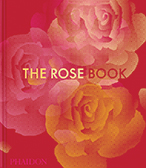
Ephemeral in nature and eternal in art, explore the rose’s place in beauty and culture in The Rose Book, published by Phaidon. RRP $69.95.